Wednesday, December 28, 2022

Hong Kong will do away with many pandemic regulations and restrictions tomorrow but this doesn't mean that normality is anywhere in sight still!

Come tomorrow, banners like this will not be 
blotting the Hong Kong landscape anymore!
 
 
With regards to specifics, a Hong Kong Free Press piece outlines that: "Hong Kong is to scrap its Covid Vaccine Pass scheme, Chief Executive John Lee has announced on Wednesday, meaning proof of vaccination will no longer be required to enter key venues. Polymerase Chain Reaction (PCR) tests for international arrivals will be scrapped, though unvaccinated non-residents will still be denied entry.  The health authorities will also stop requiring close contacts of Covid-19 patients to undergo isolation, will axe the group gathering limit of 12 people and lift venue capacity limits"!
 
Hong Kong's move follows in the wake of China's decision to abandon its Zero Covid strategy (presumably because it was failing). And while there are undoubtedly people who hail it, others are less pleased -- including respiratory medicine specialist Leung Chi-chi.  "The medical system could be overburdened as Hong Kong still sees the trend of daily confirmed cases at a high level under the winter season," he's stated.  In addition, he's suggested "that travellers from the mainland to Hong Kong should be required to have received at least two doses of vaccination to reduce the potential infection risks."
 
Frankly, if many Hong Kongers had their way, the border between Hong Kong and Mainland China will be sealed off, not opened widely.  But that's not going to happen.  Despite cases roaring in Mainland China, Hong Kong Chief Executive John Lee announced on Christmas Eve (last Saturday) that by mid-January, Hong Kong’s border with the mainland would reopen.  And the scrapping of the vaccine pass and a number of other restrictions slated to take place from tomorrow appear designed to smooth the movement of Mainland Chinese people not only into Hong Kong but, also, while they are in Hong Kong!
 
Something worth noting: Hong Kong is still refusing to "lie flat" by keeping some pandemic rules and regulations.  Measures that will remain in place even after today include "the mask mandate, isolation orders for Covid patients, daily rapid testing for students and teachers, a ban on unvaccinated international arrivals, and a ban on eating on ferries."  As Hong Kong Free Press chief editor Tom Grundy noted in a Tweet: Hong Kong still "is definitely not 'back to normal"".  And that's not even taking into account the continued existence of the draconian national security law that China imposed on the territory back on June 30th, 2020.
 
Something that makes the situation in Hong Kong particularly abnormal: even while it has a pandemic mask (wearing) mandate, it also has a mask ban on the books.  A reminder:back in October 2019, then Chief Executive Carrie Lam invoked emergency powers to introduce a Face Covering Regulation targetted at pro-democracy protestors.  When I first heard of it, I called it another disastrous proposed piece of legislation.  Now I think of it as frankly ludicruous.  
 
But for the Hong Kong government, it of course has the purpose of providing a legal basis for punishing protestors and dissuading protests.  As now overseas based journalist, Kris Cheng, Tweeted this afternoon: "So in Hong Kong there will be no more quarantine order, vaccine pass, and all social distancing measures except mask mandate. That means peaceful protests are fine now if you wear a mask? oh wait the anti-mask law for protests is still in place…"

Monday, December 26, 2022

Seasons greetings, and a tourism plus pandemic update!

 
Another photo taken while out hiking last week
 
Many people have been taking advantage of the beautiful weather and long (Christmas-Boxing Day) holiday weekend to venture out to various parts of Hong Kong in recent days, and sharing their photos showing that Hong Kong is really beautiful.  Ironically, tourism sector lawmaker Perry Yiu Pak-leung also chose this past weekend to assert that "the charm of Hong Kong as a single destination is limited" -- and thus should be marketed as a twin destination along with Macau for "great synergy".
 
I'm not going to deny that Macau is not without any charms (and I do miss my once annual trips to the former Portugese enclave that used to be a convenient one hour ferry ride away).  But there's no way I believe that it's got more to offer to tourists and travellers than Hong Kong; this not least since the 118 square kilometer sized territory is dwarfed by 1,118 square kilometer Hong Kong!
 
And while it's true that Hong Kong has not had many visitors in recent years, that's due far more to Hong Kong's harsh pandemic rules and regulations -- which remain more restrictive than anything to be found in pretty much the rest of the world, especially now that Mainland China suddenly abandoned its Zero Covid ways a few weeks ago -- and the scary national security law that China imposed on it on June 30th, 2020!    
 
In addition, something that wasn't helping make Hong Kong attractive to non-Mainland Chinese tourists as well as negatively affected Hong Kongers' quality of life for several years leading up to 2020 was the vast numbers of Mainland Chinese visitors that were regularly flooding into Hong Kong (peaking at 51.04 million in 2018).  And I have to say that one of the greatest boons of the pandemic has been how much less crowded many areas of Hong Kong -- including Tsim Sha Tsui (which is home to the greatest density of hotels in Hong Kong), Mongkok (a popular shopping area) and Causeway Bay (another major shopping area) -- have been and, consequently, a greater pleasure to stroll around than previously was the case.
 
So I'd think that many Hong Kongers are absolutely not looking forward to the Hong Kong-Mainland China border reopening any time soon.  And of course this feeling is exacerbated by China currently experiencing a Covid outbreak so massive -- as in possibly 250 million people being infected in December alone! -- that it's caused the Zero Covid policy to fail spectacularly and China's top health body to stop publishing daily Covid figures (be it from shame -- since it's been estimated that the country could see as many as 1 million pandemic deaths -- or because things are so out of control that they no longer can get any reliable figures).
 
It's not just the thought of many infected people flooding into Hong Kong from Mainland China.  Rather, it's also the fear that they will overwhelm Hong Kong's health services and such.  (Something which won't be all that difficult to do since there already were concerns expressed late last week by public hospital chief Tony Ko about emergency rooms being inundated and long waiting times over the holiday period.  Oh, and the overall occupancy of medical beds in acute hospitals is currently at around 112 per cent!)
 
 
In anticipation of this, there have been calls -- including by a University of Hong Kong virologist and the head of a Hong Kong pharmacists' group -- on the authorities "to consider charging non-residents for Covid vaccinations here".  The president of The Society of Hospital Pharmacists, William Chu, also warned that "free jabs and treatments could prompt too many to cross the border to access medical services here and burden the local system.  "People from mainland China demand for more symptomatic relief medications," he said. "They may go to Hong Kong to get more medications. At the moment they are looking for medications on the mainland but the supply is very limited.""
 
Already, there have been reports galore of Hong Kong pharmacies having run out of Panadol and related medicines thanks to people snapping them out to send to their relatives and friends in Mainland China.  I hate to say this but the sight of empty shelves is leading to talk of "locusts" again.  And, at the very least, it's adding to the fears and repulsion people have at the thought of Mainland Chinese "tourists" -- shoppers, more than anything else, really -- descending on Hong Kong in droves once more.     

We always knew that it would be a case of when, not if, they would return.  Now it's looking very much like it will happen next month, and maybe even early in January.  Ironically, up until the past few weeks, there had been suggestions that many Mainland Chinese people would want to avoid Hong Kong, seeing it as "unclean" and "tainted" (since Hong Kong's "Zero Covid" has long been more like "Dynamic Zero" rather than completely in step with what was implemented on the other side of the Hong Kong-Mainland China border).  
 
A reminder: Hong Kong's Covid numbers have been at five figures with regards to daily new cases for some time; with 18,533 reported for today alone.  Also, the daily critical, ICU and death figures have been on the rise since October.  So, yeah, the pandemic is most certainly not over -- in Hong Kong, Mainland China and the world over.  And the only reason why I don't mention Hong Kong's Covid numbers and situation as a factor in terms of attracting or detracting tourism is because Covid is rampant everywhere and people in many territories have just decided to "live with the virus"!  

Saturday, December 24, 2022

The Narrow Road centres on -- and is anchored by -- an ordinary hero (Film review)

  
What may be the last Hong Kong film I'll view in 2022
 
The Narrow Road (Hong Kong, 2022)
- Lam Sum, director
- Starring: Louis Cheung, Angela Yuen, Tung On-na
 
Not so long ago, a film friend complained to me that the protagonists of contemporary Hong Kong movies tend to be losers rather than heroes.  While I'd accept that many recent Hong Kong movies have had main characters who are neither super heroic nor larger than life, I still think that they can be classified as ordinary heroes: people who manfully make the best of bad situations, and show their humanity along the way.  That description fits the protagonists of such as Still Human (2018),  Zero to Hero (2021).  I think also of the main characters of Madalena (2021), a film that shares the same lead actor as The Narrow Road.  
 
Louis Cheung appears to have become the "go to" actor for filmmakers looking for a male star who convinces as a working class Everyman that is a diamond in the rough; this not least in terms of his ability and willingness to care for women whom he sees more good in than they might do so about themselves.  In Lam Sum's The Narrow Road, Cheung plays Chak, the operator of a one man cleaning company which is struggling to make a profit but whose services are increasingly in demand thanks to the ongoing pandemic, as well as the filial son of a mother (portrayed by Petra Au) whose ways of thinking and acting -- including with regards to wanting to reuse surgical masks and thinking she's going to win big at the lottery or with a bet on a horse -- Hong Kongers will find all too alternately amusing and frustratingly familiar.
 
With his workload increasing and his back aching, Chak decides to hire an assistant.  Enter Candy (played by Angela Yuen), a single mother with no professional cleaning experience but with the requisite energy and, more importantly, willingness to do the job for the low wages that Chak initially offers.  Early on, Candy gives ample indication that she might well prove to be trouble.  But she -- or, maybe, actually, more so her precocious young daughter, Chu (essayed by Tung On-na) -- is charming enough to get the good-hearted Chak caring for both daughter and mother.   
 
If truth be told, I had problems feeling sympathy, never mind empathy, for Candy -- and I'm not entirely sure whether this was intentional.  Also, while there may be some who might think that Chu's cute, I didn't.  On the other hand, I did appreciate that the young girl made many "from out of the mouths of babes" pronouncements that were spot on with regards to what's going on in Hong Kong; including about how many people are leaving Hong Kong, and who are the types of people who are able to do so vis a vis who are staying -- and/or are left -- behind.
 
Alternatively, it's easy enough to feel for Chak, and respect his efforts to do his job properly and professionally, be it cleaning -- and sanitizing or disinfecting -- a gym, medical clinic, cha chaan teng or the home of someone who recently died there.  His life may be a limited one in terms of prospects for upward mobility or even opportunities for luxuries (including going away for a holiday abroad or even dining on Korean barbecue).  But The Narrow Road's emotional anchor appears to take quiet pride in his ability to stay on the straight and narrow path even if he's not entirely certain where it will take him.
 
At the Golden Horse Awards last month, The Narrow Road's Wong Hin-yan came away with the prize for Best Original Film Score.  For my part, I reckon that the film's cinematographer Meteor Cheung deserves kudos, if not an actual award, for his work in crafting evocative visuals: including of a Hong Kong that has fallen on hard times; with many shop fronts shuttered and life taking place in unglamorous surroundings far away from the Central business district that may well feel foreign to many Hong Kongers.
 
It may ostensibly be a drama about a nobody but The Narrow Road says much about the current state of Hong Kong.  Still, lest one think its tale is an entirely downbeat one, remember this about Hong Kongers: they are survivors.  And even while it also does not deny that their home city's future is uncertain, this cinematic offering made by Hong Kongers for Hong Kongers does show them to be so.          
 
My rating for this film: 7.0

Thursday, December 22, 2022

Hiking on an alternative route less taken between Mui Wo and the Trappist Monastery pier (Photo-essay)

I went for my first hike in a number of months earlier today which also was my first hike in a while where I wasn't the hike leader.  The friend I was with and I have been on the usual route that goes from Discovery Bay to Mui Wo via the Trappist Monastery several times.  We've also (separately) hiked from Discovery Bay to Mui Wo via Lo Fu Tau.  
 
This time around, my friend took me on a route further to the east of both of those that's not as easy as the former but also no where as difficult as the latter.  There were a couple of uphill sections on this trail -- which also appears to be far less of a beaten track than the others -- that I found on the challenging side (and one where I worried that I had gotten stuck because the next step was just so high up!)  But all ended up being well; with some stupendous views to be had and also an interesting sight involving a fishing folk using an interesting fishing method to get quite the haul near the Trappist Monastery pier that ended up being the hike's end destination (rather than Discovery Bay)!
 
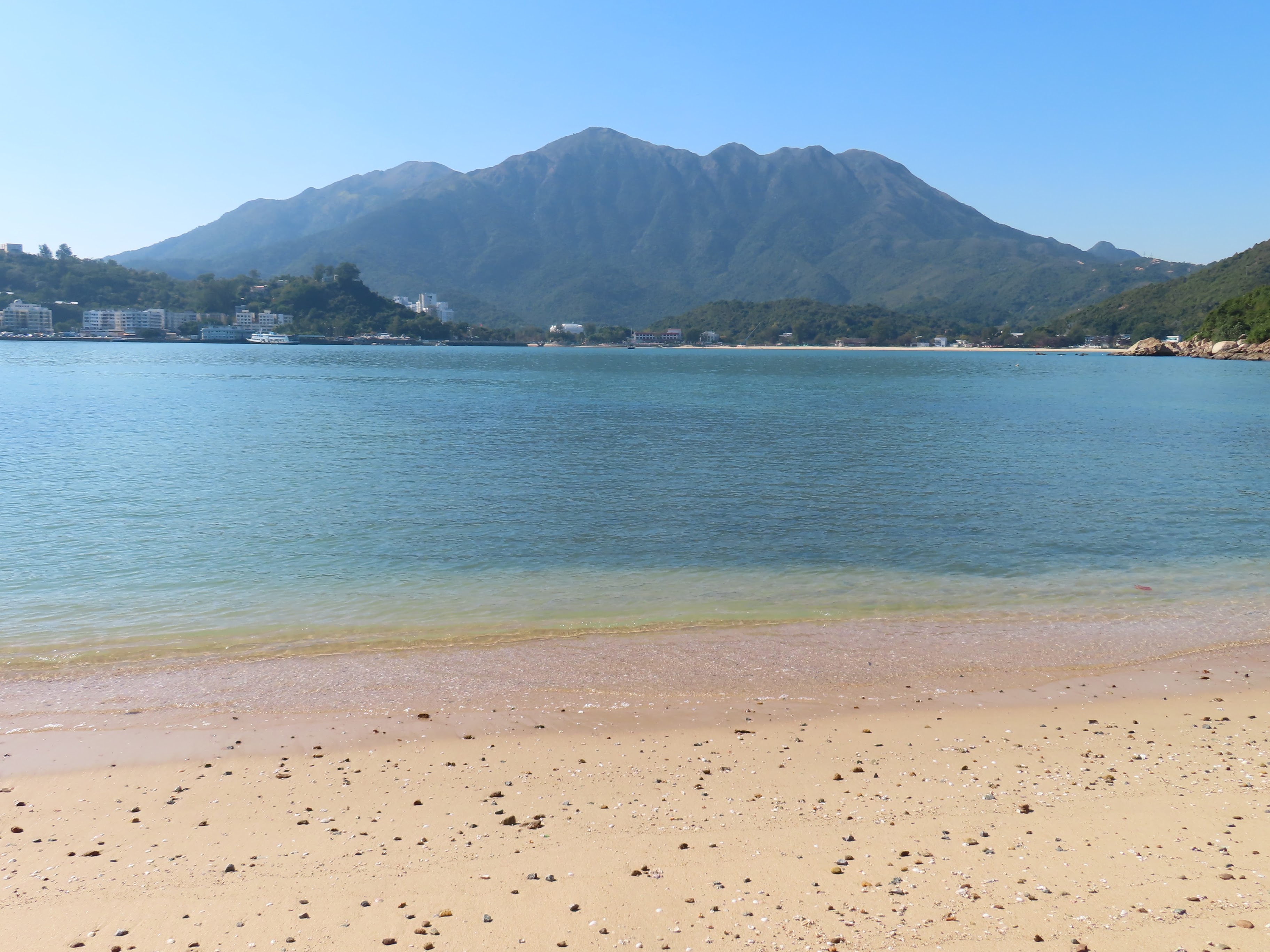
View from the far end of Silver Mine Bay Beach
 
View from an unnamed beach looking back at Silver Mine 
Bay Beach, Mui Wo and the mountains behind them
 
As we ascended up the hills, a view unfolded that 
included the significantly more populated -- but still 
 
I know people who don't like seeing urban scapes when
they are out hiking but for me, this can be a charm
of hiking in Hong Kong! :)
 
Of course, if one wants to focus on greenery,
one can indeed do so when out hiking in Hong Kong :)
 
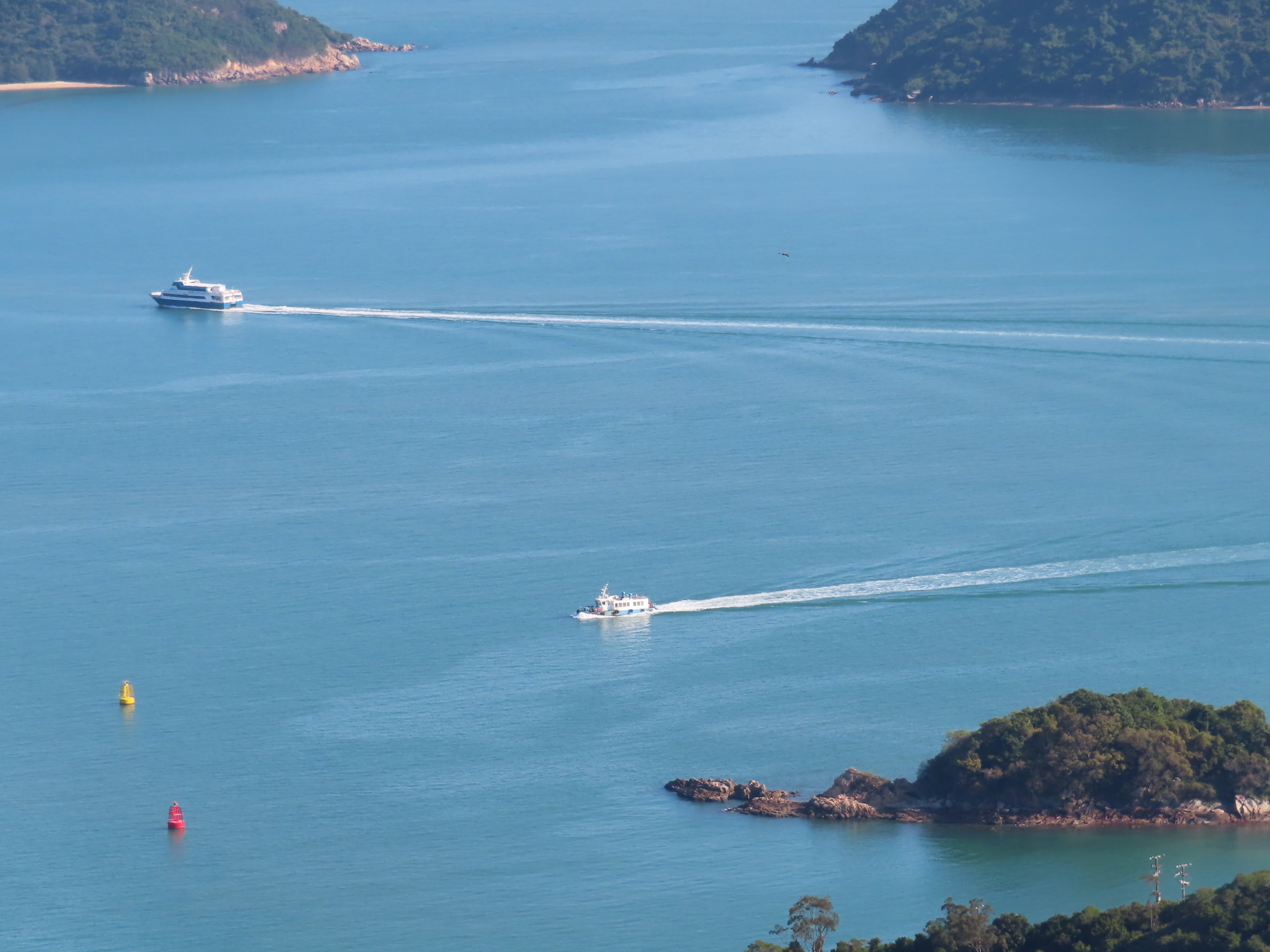
On this hike, one also could do some boat viewing 
if one's so inclined -- as was the case with me :b
 
Quite the view, especially on a super bright and blue
sky afternoon like today's was!
 
Fishing vessels with people hard at work (and, from 
what I could see, pretty productive work at that!)

Tuesday, December 20, 2022

A tale of two bars: one now closed; the other of which may still be around but has been negatively affected by the pandemic too

 
My favourite drink at my favorite bar in Hong Kong
often comes with a heart-shaped lemon peel :)
 
For a number of years, my favorite place to hang out and drink in Hong Kong was Sake Bar Ginn.  I'd go there once a week and felt privileged to be counted as a regular there.  Over time, I made a number of friends there who were more than just drinking buddies -- in that we'd often meet up outside of our favorite sake bar as well as over there.      
 
A year or so ago, Sake Bar Ginn closed down.  If truth be told, I haven't missed it much as I stopped going to it more than a year before its Japanese owner decided to call time on not only her establishment but also her time in Hong Kong (due to diminishing economic returns here; thanks in no small part to not only the pandemic but Hong Kong's anti-pandemic measures that have included, for some months, the closing of bars).  
 
One reason for my deciding against spending (much) time there in recent years was that someone who was even more than a regular there than I was was very vocally "blue".  And while I could tolerate his pro-Beijing and -police rantings before June 12th, 2019, I couldn't after that fateful day.  (Ironically, two other Sake Bar Ginn regulars became two of my "protest buddies" -- in that we went on a number of anti-extradition bill-turned-general pro-democracy protest marches and rallies together in 2019 and into 2020.)           

The other reason was that Covid happened -- and for a good part of the pandemic, I've been reluctant to spend time in bars, especially ones located in frequently crowded party areas like Lan Kwai Fong (which Sake Bar Ginn was), where one frequently had to run a veritable gauntlet through upon leaving late at night (and sometimes also when going over there earlier in the evening).  And I have to say that the last time I went to my once favorite bar, before masking became required in Hong Kong, I was put off by being in a small lift with a bunch of unmasked folks, two of whom ended up going into Sake Bar Ginn before me.
 
A measure of how much the pandemic has impacted/changed my lifestyle is that whereas I used to go to bars weekly (and often more than once a week) pre-pandemic, I can count on my two hands the number of times I've been to an actual bar in the past two years (and pubs not at all).  And all of my bar visits have actually been to only one drinking establishment: located in a building where it is the only establishment of its kind there, in an area that's associated far more with other activities besides drinking.  

This particular bar has been around for years and has built up a loyal clientele.  But in recent years, it's suffered from a significant loss of business.  One reason is that many of its Japanese clients (it's another bar owned and operated by a Japanese national) decided to leave Hong Kong -- or were sent back home by their companies.  Something else that also negatively affected its business is the reluctance of many people -- like me -- to go to bars during the pandemic.
 
And this particularly so after the government introduced a strange extra requirement for bars that have bar licenses (as opposed to restaurant or cafe licenses -- something that a number of (primarily) drinking establishments rushed to do in the past year or so) in June of this year: namely, that customers would have to take a Rapid Antigen Test (RAT) within 24 hours prior to entering a bar and show that they had a negative result from it.  This on top of being required to use the Leave Home Safe trac(k)ing app and show proof of one having been fully vaccinated (something which currently stands at three shots of a Covid vaccine) -- like with restaurants, cafes, cinemas and many other venues.
 
The proprietor of my current favorite Hong Kong bar estimates that his business dropped by 70 percent after this requirement was introduced -- and, for a time, talked of closing down before the end of this year.  Happily (for me and other fans of his cocktails and his bar's extensive selection of whiskies), he and the bar are still around currently -- and I am sure that he'll feel some relief at today's news that, starting from this Thursday, the RAT requirement is to be scrapped

Still, one has to wonder: is all this too little too late?  How much extra time has this particular relaxation of an unpopular regulation bought him and his business?  "Addressing reporters at a press conference on Tuesday, Under Secretary for Health Libby Lee said the latest relaxations will come into effect on Thursday. “We hope to have some easing [of policies] but we also have to be careful about the pace,” Lee said."  But while it may sound like she thinks that Hong Kong is the turtle that will eventually win the race (over the rest of the world's hare), my sense is that the rest of the world (including many in Hong Kong) are more inclined to think that the Hong Kong government consists of a bunch of clueless cuckoos than reliable, slow and steady turtles!

Saturday, December 17, 2022

An enjoyable excursion to a revitalised Yim Tin Tsai (Photo-essay)

It's currently cold enough in Hong Kong that I'm wearing a Norwegian sweater (bought when I visited Norway and went on a Hurtigruten cruise back in 2015) and also thermal underwear!  And the temperatures are expected to drop further tomorrow before gradually rising to more comfortable levels once more next week.  The cold weather's also been accompanied by some rain in recent days.  So the friend I went with to Yim Tsin Tsai earlier this week and I count ourselves pretty lucky that the rain only started falling only at the tail end of our excursion to the Sai Kung area island that I had not been to since 2013.   

A lot has changed since my first visit to Yim Tin Tsai.  Among other things, the Occupy phase of the Umbrella Movement happened (in 2014), as did the anti-extradition bill protests of 2019 and China's imposition on a national security law on Hong Kong (on June 30th, 2020).  On a personal note: one of the friends I explored the island with back in 2013 is no longer in Hong Kong (and two others of our party of six that day are due to leave next month).  

Yim Tin Tsai has changed a bit too -- and, it seems, for the better.  For one thing, it doesn't seem to be abandoned anymore.  Also, the scene has been enlivened by such as its playing host to the Sai Kung Hoi Arts Festival (which opened last month and scheduled to go on for three years) whose art installations and cheerful volunteers helped make a cool (temperature-wise) gray day actually enjoyable and metaphorically cool! 
 
View from the back of the boat that took us
 from Sai Kung over to Yim Tin Tsai
 
An early reminder that Yim Tin Tsai is a Christian
 
The island's chapel (whose size I think of as more like 
that of a church) was closed when I previously visited
 
Happily, I was able to see the inside of St. Joseph's Chapel
this time around, and what an impressive interior it has!
 
Something else I was happy to see: that Yim Tin Tsai's 
 
One of the cooler art installations: Joseph Chan's Water Dragon 
-- a (hu)man-powered dragon spine water wheel! 
 
Not an art installation but, instead, the doorway of
an old house that looks like people are planning to 
renovate and live in/re-use at some point in the near future
 
The boat that took my friend and I back to Sai Kung
(sans dog, who looked interested in going on it too) :)

Thursday, December 15, 2022

A rare and bittersweet legal victory for lawyer-activist Chow Hang-tung yesterday

A typical June 4th scene in Victoria Park not so long ago
 
Back in early January, lawyer-activist Chow Hang-tung was sentenced to 15 months in prison for incitement for a banned vigil to commemorate those who died in Beijing’s crackdown in Tiananmen Square in 1989.  Yesterday, that conviction was overturned after a court ruled that the Hong Kong police's decision to ban last year's June 4th vigil was unlawful.

"Wearing black and standing before judge Judianna Barnes at the High Court on Wednesday, Chow appeared surprised and joyful when the results of the appeal were handed down.  As court was dismissed, people in the public gallery let out cheers before being told by security guards to quieten down." Thus reported the Hong Kong Free Press (HKFP).
 
The same AFP piece contains useful contextual information for those who didn't realize, including the following: "Chow, a 37-year-old lawyer and one of Hong Kong's most prominent democracy activists, led a now-disbanded group that used to organise the city's annual candlelight vigils to mourn those killed in Tiananmen Square when China sent troops to crush democracy protests."
 
Also: "Police have banned the last three vigils citing the coronavirus and security fears and the courts have already jailed multiple activists who defied those bans, including Chow"; thus making it so that the last authorized June 4th candlelight vigil allowed in Hong Kong was back in 2019 -- the 30th anniversary of the Tiananmen Square Massacre.  One which hundreds of thousands of people attended.  Indeed, if the vigil organizers (who included Chow) are to be believed: the number of attendees for the 2019 vigil -- which took place just five days before the anti-extradition bill march of June 9th that had 1 million participants -- actually hit a record high. 
 
Quoting the HKFP piece once more: "In a written judgement, [Judge] Barnes said that in banning the vigil, police had not abided by a section in the Public Order Ordinance that states a public meeting should not be prohibited if conditions could be imposed."  Specifically, "Although the organisers of the gathering had said they were willing to abide by any measures set out by [the] police… [the] police did not seriously consider this, and did not raise measures or conditions to be considered such as restricting the time during which people can enter the venue, the number of attendants… a requirement for scanning the [Covid-19 app] LeaveHomeSafe, wearing a mask, a ban on eating, etc., that could control the risk of the virus spreading".
 
The AFP piece sums it up as follows: The police were adjudged to have "wrongly banned the vigil in 2021 as they did not "proactively and seriously consider" ways to faciliate a public gathering, as was required by law.  As the government failed to prove the ban was legally valid, Chow's articles would no longer constitute a crime and her conviction was scrapped on appeal."
 
So a rare victory, then, for not only Chow Hang-tung but rule of law in Hong Kong.  Except that "Despite her court victory, Chow remains in custody as she faces further prosecutions including for national security charges which carry up to a decade in jail."  Also the Department of Justice has expectedly declared it will appeal this decision in a higher court. 
 
Something worth noting too: Judge Judianna Barnes is already 70 years old.  One wonders how long more she -- and judges like her who actually seem to try to make sure that justice is served -- will be presiding over courts and trials in Hong Kong.  Sadly, and contrary to the refrain often chanted by pro-democracy march participants over the year, I fear that time may not be on our side. :S