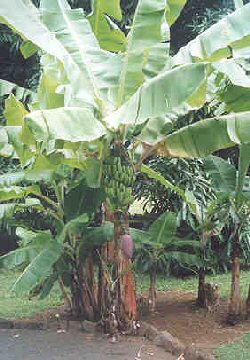
Showing posts with label Zanzibar. Show all posts

Friday, January 25, 2019

Memories of riding (pillion) on a motorbike in Malaysia, Zanzibar, and Beloit

Car and motorbike show in Central this past Sunday

Biker types hanging out near their dream machines

My choice for the most beautiful vehicle at the show ;b

After having my second dim sum lunch in two days last Sunday, I decided to go for a stroll that took me from Sheung Wan (where the eatery I had been at with my friend is located) to Central and beyond.  Near the IFC (International Finance Centre), I came across a car and motorbike show featuring some pretty eye-catching vehicles, including a number of big bikes along with sports cars and antique automobiles. 

I get the feeling that most of the people present were particularly impressed by certain of the cars (including Lotuses, Ferraris, Maseratis, Porsches and such) on show.  By my reckoning though, the most aesthetically pleasing machines on display were the large motorbikes -- all of them Harley Davidsons that were so shiny and well looked-after that I have to admit to wondering if they spend much time being ridden on actual roads!

Although I am a big advocate of public transportation (and have voluntarily gone through all but two years of my life -- when I lived in Kuala Lumpur, whose public transportation system leaves a lot to be desired -- without owning any motorized vehicles), it's also true enough that I have fond memories of riding (pillion) on a motorbike.  Of these, the earliest involved going on joy rides on the backseat of a bike belonging to a then 20-something-year-old aunt who regularly rode around town on a machine that may seem pedestrian in type and light on power but still seemed cooler to my preteen mind than those of her siblings who drove about in cars instead!

Then, when I lived in Zanzibar, I had a motorcycle-riding Italian doctor friend known to all and sundry as Dr Mario with whom I shared a common love for the beers produced by Malawi's Carlsberg brewery.  Whenever he managed to get a few bottles of their brew, he'd send word to me to drop by his clinic after work and after his own work day ended, I'd get on the back of his motorbike and he'd take me back to his place to enjoy a few beers and a feast that invariably included items -- such as salami and other preserved meats -- from care packages that his mother would send him from Italy along with fresh bread from a local bakery! 

Later in the evening (yes, after he and I had imbibed quite a bit of alcohol), he'd take me back into town.  I think in part because traffic tended to be on the light side and in part because I had got quite a bit of Dutch courage, I never feared that we'd come a cropper on those late night motorbike rides.  Instead, I thoroughly enjoyed the rides back into town as much as the rides to his place, the brewskis, the food, and viewing one of the only two video tapes he owned: the more frequently watched of  which was The Beatles' Yellow Submarine; the other of which was a documentary about giant whales!    

Probably my best memories involving riding on (the back of) a motorcycle though are those involving a beloved college professor and his beloved motorbike.  Although Dan Shea was born, went to school, taught and lived pretty much all his life in the state where the Harley-Davidson Motor Company was founded, his choice of vehicle was a British Norton bike that, after we had become friends, he'd take me on joy rides along beautifully long and lonely Wisconsin roads that went through farm land on which cows roamed or wheat grew in abundance.

I remember once telling Dan he should take prospective students on these bike roads as I figured it'd get them deciding they'd want to attend Beloit for sure, whereupon he laughed and pointed out that if he had an accident while doing so, he'd have the pants sued off him!  Since I wasn't thinking at all like a college administrator, I replied that I figured that it'd be worth the risk -- because, in all honesty, I think the experience showed how, at Beloit, professors and students didn't just interact in classrooms and actually could become friends who could have fun times (as well as seriously educational ones) together!

On June 19th, 2012, Dan Shea died of accidental causes while in Chile conducting archaeology field school.  A friend who's a fellow Beloit alum and friend plus fan of Dan broke the news to me a few days later.  I think I was so shocked by it and in denial that he was no longer of this Earth for so long that I couldn't write about his passing until now.  At the same time as I still feel sadness about his passing, I have got to realizing how many good and fond memories I have of the man that remain unsullied by his death and also still very strong, and how such as the sight of a beautiful motorbike parked in a central part of Hong Kong can get me thinking of him.         

Saturday, July 7, 2018

Walking along narrow streets and down Memory Lane in Granada's Albayzin

 
The Albayzin is Granada's old Moorish quarter
 
 Certain sections of this old Moorish quarter sent me 
down Memory Lane to Zanzibar's Stone Town!
 
After we toured the Alhambra (which, for my purposes, I'm including the Generalife since my Alhambra ticket included entry to it), my German friend decided to spend the afternoon resting up in the lovely Granada hotel we had booked a room in (that was our favorite -- for the wonderful service as well as atmospheric space -- of the Spanish hotels we stayed in) while I opted to explore the historic neighborhood in which it was located.  Situated on the hill adjacent to that on which the Alhambra (including the outstanding Palacios Nazaries) stands, the Albayzin actually has UNESCO World Heritage status along with the Islamic palatine city (and the associated Generalife) which looms large over Granada.
 
Spain's best preserved old Moorish quarter, the Albayzin possesses streets that are on the narrow side and also cobbled rather than tarred, and thus more suited to foot than vehicular traffic.  Winding and zigzagging up and down hill, they make this part of the city feel like a veritable maze which is easy to get lost in and alternately fun and a bit scary to walk about in -- and it's best to attempt to find particular streets and more to just opt to head in a general direction, over the course of which you'll pass by and through a charming square or two, and one or more of the 20 churches in the district which sit on spots once occupied by a mosque. 
 
Residential for the most part, the Albayzin also has commercial streets where Moorish-style tea houses, halal butchers, Moroccan restaurants and vendors of North African goods ply their ways.  It's also where a number of beggars and modern-day hippies, hawking trinkets and attempting to make music, are to be found -- and, frankly, made the area feel less savory and safe than I would have liked.  
 
Pickpockets and bag-snatchers reputedly haunt this quarter whose labyrinthine Medieval town planning undoubtedly would help them make their get away and I definitely got the sense that this was not the kind of area I should venture into at night alone.  On the other hand, I actually felt comfortable in the Albayzin's quiet, deserted even, back alleys which I found pleasantly atmospheric.  I also liked too that they got me going down Memory Lane to that period in my life when I lived in Zanzibar Stone Town -- located a continent away but culturally connected by way of a shared Muslim heritage (and a fellow UNESCO World Heritage-listed site too)! :)

Sunday, March 19, 2017

Ballaké Sissoko's music and my African connections

The concert program for the Hong Kong 
Arts Festival's World Music Weekend
 
A little more than a month ago, I attended the opening concert of this year's Hong Kong Arts Festival one day before the 2017 edition of the fest officially got going if the listed dates are to be believed.  So it seemed appropriate enough that I'd attend one of the three concerts collectively billed as making up the World Music Weekend taking place today despite the final day of the annual mega performing arts feast officially having been yesterday!
 
Kora player Ballaké Sissoko is by no means the first Malian musician I've heard performing.  Some two decades ago now, a friend from Mali introduced me to the music of his country by playing me cassette tapes of performances by such talents as songstress Oumou Sangaré.  And, in fact, Sissoko's not even the first Malian musician I've seen and heard live; what with my having been there when Tuareg band Tinariwen wowed the audience at the Hong Kong Arts Festival in 2012!
 
While listening to Sissoko playing on his 21-string harp-like instrument (whose sounds I personally associate more with that made by the guitar), I couldn't help but get to thinking about my friend, his countryman.  The rippling sounds that flowed from Sissoko's kora also brought to mind the lyrical music I heard in Timbuktu, Mauritanian filmmaker Abderrahmane Sissako's affecting portrayal of Mali under the rule of foreign jihadists whose list of haram activities included music-making, however innocent and beautiful -- and made me feel ever so glad that the West African country is once more largely rid of those overly-puritanical religious extremists.  
 
In addition, even though it's over on the other side of the African continent, one of Sissoko's sets got me thinking back to my time in Zanzibar all those years ago.  In particular, his music triggered memories of many an evening spent hanging out with friends on that Tanzanian island; not so much because it was like the music that got played on those occasions when we decided to just listen in silence rather than -- as we were more often to do -- lay back, gossip and laugh a lot but, actually, because it actually got me thinking of night-time in Africa itself.
 
Here's the thing: even when one lived in an urban area in that part of the world, one still would be able to see lots of stars twinkling in the black sky and have the air filled more with the sounds of people talking, sometimes singing, and going about mundane activities than hear such as vehicles moving around or other machines being operated.  And somehow, that African night scene was what Ballaké Sissoko's music conjured up in my mind -- to the extent that even when my eyes were physically wide open, it at times seemed like I was seeing something else other than the interior of the auditorium I was seated, and he was performing, in this afternoon!
 
All in all, it was quite the hypnotic experience; one which I'd love to hear if it was shared by others at this afternoon's concert.  This much I do know though: after the performance's conclusion, there was much clamoring by audience members for CDs of Sissoko's evocative music.  And, in light of my experience at the concert, it made sense to find that among those for sale was one with the title Musique de Nuit

Tuesday, March 14, 2017

Meditations on cruise ships and their impact

The kind of cruise ship that's hard to miss!

The Ovation of the Seas dwarfs most other cruise ships I've seen 
to date, and much of its surroundings when docked at Penang's port!

As astounding a sight to me was that there were not one 
but three cruise ships in port in Penang that day :O

You know a cruise ship is big when it can get mistaken for an apartment building.  And while it's true enough that the error occured when it was viewed from a distance and partially obscured by existing structures, it's also the case that the vessel in question spotted docked at Penang's Swettenham Pier Cruise Terminal last week happens to be the sixth largest cruise ship currently in existence!

With a maximum capacity of 4,905 passengers (and goodness know how many crew members), the Ovation of the Seas is, the kind of mega cruise ship I'd expect to see visiting Hong Kong -- the most visited city in the world -- but not so much Penang, where tourism is a big deal but still not that mega as far as overall numbers go.  So imagine my amazement when I saw that Royal Caribbean vessel in port in Penang that day and also two other cruise ships at the same time!

If truth be told, I hadn't realized that my home state had the port facilities to deal with such a mega cruise ship.  In addition, while I can see certain government officials -- particularly those who think big is better and that anything record-breaking would be a good thing -- would welcome cruise ships docking in droves in Penang, one only has to see the recent furor over the prospect of some 10,000 cruise ship passengers visiting Penang in a single day to realize that this is not something that all the locals are ecstatic about.

Back in the summer of 2015, my mother and I enjoyed cruising about the Norwegian coast on the Hurtigruten's MS Richard With.  But I truly believe that one big reason why we had such a great time in Norway was because that vessel was not a mega cruise ship (or, for that matter, a conventional cruise ship featuring all manner of bells and whistles in terms of facilities).  

Because the MS Richard With is not a super size ship, it could sail into fjords like the UNESCO World Heritage-listed Geirangerfjord and even narrower Trollfjord (where it was actually able to admirably execute an 180 degree turn) that larger vessels could not.  Consequently, the likes of my mother and I got to see far more amazing scenery than if we had been on a bigger cruise ship, like quite a few of those we saw in Norway and heaved a sigh of relief that we were not passengers on.  

Something else I noticed while in Norway was that certain smaller towns that the MS Richard With docked at would feel way too overwhelmed by a larger number of visitors suddenly descending upon them in more or less one fell swoop.  All in all, I could imagine locals getting stressed out, including those assigned to service the visitors, and the visitors also coming away feeling with a less than optimal touristic experience courtesy, among other things, of the town they were visiting ending up having more tourists than locals at the time of their visit!

Going even further back in time: decades ago when I was living in Zanzibar, a senior government official told me that while they were happy that cruise lines were putting this storied Indian Ocean isle on their itinerary, it was imperative that they made it so that passengers of cruise ships docking at its port would have time -- and consider it worth their time -- to venture further away from the port area than they thus far had been doing.  More specifically, he said that for it to be worth Zanzibar's while to host those cruise ships, the passengers needed to be visiting, dining out at and otherwise patronizing more local than foreign-run establishments.  Otherwise, Zanzibaris would only have the hassle that came with the increased traffic and such but not the benefits.

I often have thought about that wise Zanzibar official's words when contemplating many a regular Hong Konger's dislike of, and disdain for, the millions of visitors from Mainland China that pour into the Fragrant Harbour annually.  And I definitely hope that tourist arrivals in Penang can be handled more responsibly and intelligently than it observably has been in Hong Kong.  In the latter case, I think spacing out cruise ship visits would be a step in the right direction.  Otherwise, as we have seen too often, too much of a good thing can make it become unpopular, unwanted, despised and just outright bad. :S              

Tuesday, October 25, 2016

Housing eccentricities and downright madness!

The Yick Fat Building has appeared in many movies but 
it's a real life place rather than a made-for-movies set! :O
 
Perhaps more amazingly is that there are buildings
similar to it located in the vicinity!
 
Often times, when I tell people that I spent two years of my life in East Africa, they have visions of me living in a mud hut in the middle of nowhere and are kind of disappointed when I tell them that, actually, I lived in homes located in an urban space.  At the same time though, I consider some of them to be among the most "exotic" in which I have spent time in.  
 
We're talking, after all, of such as a place in Zanzibar Stone Town whose directions for visitors to find it ran along the lines of "Go to the Anglican Cathedral and stand near the baobab tree nearby.  Look for the bicycle mechanic shop.  The house I'm living in is located behind it!".  Oh, and there was the fact that another of my Zanzibar Stone Town residences was located in the grounds of a graveyard and had bush babies living on the roof!
 
In addition, as far as physical amenities were concerned, all of the places where I lived in Zanzibar (I bounced around for a bit there and stayed in four different places over the course of nine months or so) didn't have hot water to bathe with, and three of them weren't equipped with fridges (which necessitated my having to go to the market pretty much daily, like most Zanzibaris!).  Still, living conditions weren't half as spartan as when I attended archaeological field school in the Four Corners region of the US my sophomore summer and spent the bulk of my nights sleeping in a tent!

Such experiences along with that of having been a graduate student, I reckon, have made me more able to tolerate poor housing conditions than many other folks.  Yet it also is the case that there are tons of places here in Hong Kong that I simply would never ever want to have to call home.  And I'm not just talking here about the cage homes and tiny subdivided flats that I consider myself immensely fortunate to only have been in courtesy of the Society for Community Organization (SOCO)'s Life in West Kowloon exhibition in a Sham Shui Po tong lau but also the actually pretty high priced microflats that Hong Kong developers seem more and more intent on building.
 
A few years back, Queen's Cube was criticized for having flats with listed gross floor space of 400 square feet that actually had only 275 square feet of "saleable" (or "usable") space -- and went on to inspire the production of a clever "King's Cube" parody video.  But its flats seem palatial now in comparison to those in Henderson Land's One Prestige (the smallest of which are just 163 square feet).  And the madness has continued with an announcement today that Swire -- which is widely considered to be the best housing developer in Hong Kong -- will be making available studio apartments that are just 142 square feet in size later this year!
 
Again, bear in mind that I am someone who has lived in housing that a fair few people would not feel comfortable in.  (In addition to the Zanzibari and Four Corners examples, I've also done such as lived in a group house with four other people in Philadelphia, and attended boarding school in England back in the days where the bulk of the money went to education rather than accomodation!)  And yet, I think that 163 and 142 square feet flats are a bridge too far; especially at their price -- which in the case of One Prestige was close to HK$4 million (~US$515,670) to purchase and in the case of Swire's Star Studios, is looking to cost HK$12,780 (~US$1,648) a month to rent! :O

Thursday, July 21, 2016

Durian -- the seasonal fruit that got me flying thousands of miles to feast on!

Yes, there really is such a thing as durian tourism!

The very first durian I had on my recent trip back to Penang


In what can now seem like another lifetime, I lived for a time in Dar es Salaam with a Tanzanian family, the majority of whose members were born and raised on the Tanzanian mainland -- and consequently had little love for the fruit known in Kiswahili as duriani and Bahasa Malaysia as durian, unlike this Malaysian and the sole member of the family who hailed from Zanzibar (where durian grow wild).

Naturally, when durian season came along, the Zanzibari-born member of the family and I decided that we had to have ourselves some durian.  Equally expectedly, the durian-hating family patriarch ordained that no durian could be brought into the house, never mind be opened and eat there -- and there any one who wished to partake of the admittedly strong-smelling fruit would only be allowed to do so away from the house, at the far end of the garden!

Undeterred, the one lover of that fruit in that family and I went on to do precisely that.  And if truth be told, I actually do think that durian are best eaten out in the open air -- or, at the very least, some place where their unique aroma can waft freely and spread out rather than be trapped and thicken in air-conditioned surroundings!

Put another way: I love the taste of durian and am okay with its natural smell -- but feel that its aroma gets unnaturally as well as overly intense in such places as Hong Kong's air-conditioned supermarkets!  Indeed, I've been known to literally hold my nose when I smell durian in air-conditioned supermarkets, and even feel like gagging on some occasions.  Yet, against the odds, the very regular sight of the fruit that's the source of those intense odors in recent months caused me to yearn to feast on them so much that I ended up booking a trip to a part of the world where some of the best durian are to be found!

As it so happens, Penang also is where I was born and my parents still live.  And it was in the company of my mother and two friends that I drove all the way to Balik Pulau (whose name translates into English as "the back of the island") a couple of days after I arrived back to my home state for some durian in the front yard of a farm whose offerings include fresh eggs along with fruit such as -- when in season -- the much sought-after durian!

My mother had called ahead to reserve five durian -- and a good thing she did too, as it turned out that every durian at the farm that day had been spoken for!  So even though we actually would have liked to have eaten more durian, we had to content ourselves with the five that had been pre-ordered (and content ourselves with heading over to Kim Seng Kopi Tiam afterwards for some assam laksa for "afters")!

Still, although the quantity was less than we would have liked, we really couldn't complain about the quality of the durian we were allocated -- and also the diversity, since the farm owner made sure that we had five different varieties of the fruit: which ranged in flavor from sugary sweet to creamy rich (my favorite) to bitter sweet (the preference of one of our party); whose texture ran the gamut from soft and sticky to thick and firm; and whose pulp's color ranged from lightish yellow to bright yellow to reddish yellow (as can be seen by certain durian being known as ang heh (red prawn), ang sim (red heart) or ang jin (red egg yolk)).

And although Malaysian durian are known to be stronger smelling than, say, Thai durian, I wasn't bothered at all by the aroma of the durian I ate that day in Balik Pulau.  In fact, I'd go so far as to say that I could hardly smell the durian around me at all!  I think one reason for this was because our feasting took place in the open air but it's also highly probable that the durian didn't appear to smell all that much because I was so focused on devouring my share, and all of us ate ever so quickly -- because, well, the king of fruits lived up to its billing in terms of its tasting so very good! ;b

Thursday, May 5, 2011

Visa-free vs -required travel musings


Himeji Castle -- located in a country (Japan)
which I need a visa to enter

View of Heidelberg -- a picturesque town in country (Germany)
which I can enter
without applying in advance for a travel visa

"Where in the world do you want to holiday next?" This is a question I've been asked more than once in recent weeks -- partly because the past couple of weekends have been long weekends for many in the Big Lychee -- courtesy of Hong Kong's public holidays this year including Good Friday (April 22nd this year), the following Saturday, Easter Sunday (April 24th), and the Monday after Easter, May Day (May 1st) and the day after May Day (May 2nd) -- during which many a person I known has flown off for a short vacation.

My reply has honestly been: "I don't know yet". But I'll also admit that I've been considering going on a Scandinavian cruise for the first time ever this year or visiting Venice (not least because of the beautiful photos of the place that can be found in blogs such as Churches in Venice and Trekcapri's) or Vietnam... or returning for another visit to Japan -- only with the latter there remains the bureaucratic hurdle of applying for a visa; something which I won't have to do should I wish to travel to the other destinations I've been thinking of doing.

If the information on Wikipedia is to be believed, a Malaysian passport is ranked pretty high (i.e., number 13 in the world) in terms of travel freedom and visa-free access. And it's true enough that there have been times and places in the world where I've been happy to have had a Malaysian passport -- including when living and travelling in Africa, where I found that Malaysia being a part of the British Commonwealth made it so that I did not need a visa to visit Tanzania (except that I also successfully applied to be a resident of Tanzania proper and also Zanzibar in order to work and live there for two years), Kenya, Zimbabwe and Zambia (on account of those African countries being fellow members of the British Commonwealth).

Incidentally, I have often recounted the -- in retrospect -- funny experience of how it was that I literally walked across the Zimbabwean-Zambian border by way of the bridge that crosses the Zambezi River close to Victoria Falls because I wanted to see the amazing natural phenomenon from both countries -- and, at the border, when asked by the Zambian immigration official how long I intended to stay in his country, miffed him somewhat by honestly telling him that I just wanted to stay long enough to view Victoria Falls from the Zambian as well as Zimbabwean sides! (Fortunately, the guy wasn't upset enough to deny me entry into his country -- and I spent only a few hours in Zambia before walking back to Zimbabwe later that same day!!)

In contrast, I would not be able to walk across the border between Hong Kong and Mainland China without first acquiring a China visa -- something which I actually don't possess at the current time -- and, in fact, only have applied for once... years ago when I went on holiday to Beijing with my mother! (And for the record: for all of my having now lived in Hong Kong for more than four years, I still have paid a single visit to neighboring Shenzhen...)

On another ironic note: I also require a visa to visit the U.S.A., a country where I lived, studied and worked for close to one and half decades of my life. (Again for the record: I never did apply for a green card, never mind citizenship -- not least because, as I told many a (then) disbelieving American friend, I actually didn't think I would want to spend the rest of my life in that country and would want to leave it one day...)

All this I actually don't mind too much. On the other hand, it's true enough that I wish that Malaysians didn't require a visa to visit Japan. And if that were the case, I definitely would travel to the Land of the Rising Sun more often -- to sample its food and other attractions that I really wish I could conveniently avail myself of... though even with the visa requirements, I do plan to pay visits to such places as Nikko, Kamakura and Shikoku some day soon (as well as already have had the pleasure of visiting such destinations as Mount Aso, Dazaifu and Himeji along with the cities of Tokyo, Kyoto, Osaka, Sapporo, etc., etc.!)

Sunday, November 14, 2010

Clear Water Talk


A beautiful view of clear water, sand and more
from Stanley Main Beach

Another pleasing view of similarly clear water from
nearby (but far pebblier) Hairpin Beach

In what can seem like a different lifetime, I lived in Zanzibar, the storied part of the United Republic of Tanzania that once was the capital of Oman. Among the things I loved about the place was how beautifully blue the waters of the surrounding Indian Ocean was -- and I would happily spend hours gazing out at it (and the eye-catching dhows that sailed about the sea).

One day, while I was in the middle of doing just that, a Zanzibari friend interrupted my reverie to enquire why I was so enthralled by the ocean views from his homeland; and this especially since he knew that I also hailed from an island -- albeit one located on a different continent from his. "What's so special about the views from Zanzibar?", he wanted to know. "How blue and clear the ocean is", was my answer. "Aren't the waters surrounding your homeland the same way?", he enquired. "Not at all", I scoffed. "Why was this so?", a puzzled he wanted to know. "Because it (the Strait of Malacca) is one of the busiest shipping lanes in the world -- and its waters thus pretty polluted", I told him.

My answer caused my friend to think a while and then tell me something that made me feel so very sad as well as gave me great pause: "I'd happily have the waters off Zanzibar be polluted if it meant that Zanzibar could have the kind of economic development and success that Malaysia has". (To put things in context, the year that I lived in Zanzibar, Tanzania was ranked as the second poorest country in the world.)

Some fifteen years after that conversation which I still vividly remember, I was strolling about on a couple of beaches of the Big Lychee and found myself marveling at how clear the waters off shore were. For how is it that despite Hong Kong being a major international port, its surrounding waters can be so very clear and apparently cleaner than one might imagine?

To be sure, there are days after rains when the seas and rivers can contain far more rubbish than one would like to see. But I actually think that Hong Kong's Environmental Protection Department deserves some credit for cleaning up the territory's waters (even while it often seems to be the case that they could and should do more about the air quality of Asia's World City).

In any case, it does seem that Hong Kong really manages to have this cake and eat it: that is, have a healthy economy but also a physical environment that can be very pleasing to the eye (and help make for some great days at the beach)! :)

Saturday, June 5, 2010

Sparkle(s) (This week's Photo Hunt theme)


Compared to quite a few other people I know, I'm actually not that fond of water -- for other than drinking and cleaning with, that is! As an example, I haven't gone swimming in years, maybe decades even. And when in a seaside setting, I usually am quite content to do not much more than gaze at the sea, take photos of it and -- only if the water really is clean and clear -- dip my toes into it.

So it can seem rather ironic that a good part of my life has thus been lived on islands -- and I don't just mean large ones like the main British isle either! (For the record, I was born and lived for approximately two decades on Penang Island, spent half a year on Zanzibar Island (aka Unguja) and now reside on Hong Kong Island.)

Still, in mitigation, it's also true enough that I do like walking on waterfronts -- and have indeed spent quite a bit of time doing that and, while at it, admiring the sparkles on the water that the sun (one beautiful day out at Tai Mei Tuk) as well as artificial lighting (including from Cheung Chau's utility-designed municipal services building) sometimes create.

And even though Victoria Harbour dominates the Hong Kong tourist imagination, the truth of the matter is that views of the water are to be had in so many other parts of the territory. And, as I trust that the two photos at the top of this Photo Hunt help show, these often aren't half bad in terms of being scenic and interesting! ;b

Friday, February 6, 2009

Street food musings


Street food, glorious street food! :b

Earlier this week, sbk posted an entry on her blog with a photo that got my mouth watering. Thus I was reminded of the power of pictures! Then this morning, a comment by Glenn on the comments thread of that same blog entry got me realizing that it has been a while since I last put up some food photos over on this blog. So here's remedying the situation this evening with another photo filled with what Hong Kong is really good at: fried street food; this one taking from an overhead pedestrian bridge in Wan Chai (hence the inclusion of the stall's colorful striped awning in the picture)! :)

On the subject of street food: I have to say that I can't believe that Hong Kong as well as Penang is not on a World Hum Eight Best Cities for Street Food list. Or, for that matter, Philadelphia (whose hoagies, cheese steaks, soft pretzels and hot dogs come with a choice of sausages, including Italian sausage and Polish kielbasas)! And this from someone who's lived in one of those cities (though "city" is rather generous to describe Zanzibar Stone Town!) as well as visited -- and eaten -- in two others (Berlin and Istanbul)!!

Saturday, June 2, 2007

Art (This week's Photo Hunt theme)


Recently, my posts have been on the Asia-centric side -- reflecting the fact that I've spent the last few years of my life over on the world's largest continent. Then there's it also being so that since returning to my home continent in July 2003, I've not ventured outside of Asia even for vacations -- that is, unless one counts the time I spent on the European side of Istanbul as time spent outside of Asia proper. Additionally, on a photographic note, there's the fact that I only started using a digital camera in the past couple of years; making it so that all the photographs I've taken using a digital camera have been taken in Asia.

Still, while it's true enough that I took the above photograph of the piece of art back in my home state of Penang, the fact of the matter is that the painting by an artist friend named Muzu Suleimanji is one that depicts a Zanzibar Stone Town street scene; and is one of the art works that I considered very much worth lugging all the way back from Tanzania -- where I became acquainted with a number of talented artists (including Makonde wood sculptors and Tinga Tinga painters as well as those who favored more Western art styles and media) -- after my one and a half sojourn in that East African country came to an end in July 1996.

On an even more personal note: The street depicted in the painting is one that I used to regularly walk on when I lived, as I did for some six months or so, in the Zanzibar Islands. And yes, should you wonder, I did often feel like I was in a scene from an Indiana Jones type movie and that I was quite the intrepid adventurer for being at home in that kind of scene!

Returning back to earth: Although it may not look like it (and especially to those who are more used to towns possessing roads that tend to be accessible to cars), the pictured -- and, I think you'll agree, picturesque -- street actually was one of
the UNESCO World Heritage-listed Zanzibar Stone Town's wider and busier public ways! More to the point as far as I was concerned, it was one of the ways that led to my usual workplace -- the Palace Museum, should you wonder; and yes, this means that I actually worked in a building that used to be home to sultans for a time! -- from a couple of the places I lived in when I was in Zanzibar. (For one reason or other, I ended staying in four different residences during my relatively short stay there... :S)

In any case, should you think I have a colorful past, let me tell you about Zanzibar's: A part of the United Republic of Tanzania since April 26th, 1964, it used to be a British protectorate and its own independent sultanate (whose last sultan was overthrown -- though did not lose his life -- during the bloody Zanzibar Revolution, an event that also took place in 1964). Further back in history, this Indian Ocean territory that became home to Hugo the Hippo in fiction -- and one that, let's face it, is now part of one of the poorest countries in the world -- also actually served for a time as the capital of Oman! ;o

Wednesday, December 6, 2006

Tree tales


Yesterday, a copy of the latest issue of the Beloit College Magazine arrived at my abode. On its cover was a beautiful view of a particularly green part of the College's campus. And within it was a rather lengthy feature article on Our Campus Trees which was subtitled "With hearts and minds: How we love the Beloit College trees."

Though I hadn't really thought about it until I saw that line, it's true enough that I, too, love(d) the Beloit College trees. And consider them to have played their part in my Beloit College experience. In addition, I can actually testify that at least one of them played a part in making me warm to the college when I visited it as a prospective student -- for the very first Beloit College student I ever saw was someone who was sitting under a tree studying; and, as it so happens, that image absolutely fitted into my idea(l) of how and what college life was supposed to look and be like!

As it turns out though, I spent more time walking past trees then sitting under them while at Beloit. This probably had something to do with Beloit being in Wisconsin, a state in the U.S.A. where -- it is said without too much exaggeration -- winter comes with the Halloween ghost and only leaves with the Easter Bunny. (Also, for the record, the coldest it ever got during my four years at Beloit was -90 degrees Fahrenheit; a temperature so cold that I have to spell it out as "minus nine zero Fahrenheit" when I tell this to people, otherwise, they'll think I said -19!)

And in truth, most anywhere in the world that I've been, I've tended to appreciate trees as nice but nevertheless mere background features all the same rather than anything else. However, Zanzibar, Tanzania, proved to be the exception. This is because many -- if not most -- of the roads in Zanzibar, including Zanzibar Stone Town, where I worked and lived for the better part of 1995, don't have names. So the way to give directions to people is by way of citing local landmarks such as prominent establishments, buildings...and trees. (As in -- this for a place I stayed in for a time there -- "Do you know where the Kiswahili Institute is? Well, I live behind it, in the house that you have to walk through a graveyard to get to...!")

Still, I never ever could claim to be an expert at identifying different kinds of trees -- that is, beyond the obvious standout ones like coconut trees, banana trees, papaya trees and baobab trees -- though. So, one day, when I was due to meet a couple of Zanzibari colleagues who decided that I should go out into the countryside for a day with them, I reacted with some consternation when they suggested that we should meet "at the mango tree near the market" before going off to catch our bus.

At first, I tried to hide my ignorance from them. So I decided to ask whether mangoes were in season. "No, of course not!" they replied. One of them then quite logically enquired why I asked this. "Well," I had to admit to them, "because if mangoes aren't growing on the tree, I won't know how to spot a mango tree!"

Suffice to say that the pair of them just about nearly keeled over with shock at discovering this fact, then nearly keeled over again -- this time because I got them laughing so hard and hysterically that they became close to breathless. "But how is this possible?" one of them enquired after he finally got back enough breath to speak.

Of course, what made things more unbelievable for them was that -- as I had previously shown them over the course of my work -- I knew how to do such things as tell the difference between different kinds of beds (e.g., four poster, king size, queen size, single, etc.). (A "skill" that's quite useful, more than by the way, when you're doing collections inventory at a former sultan's palace.) And -- this, thanks to the archaeological portion of my anthropological training -- discern, from looking at ground topography and related evidence, where there had previously been buildings; particularly, their walls.

Yet I did not know how to spot a mango tree. Or, for that matter, most other kind of trees which what seemed like just about every single Zanzibari knew, from childhood, how to identify.

About the most reasonable explanation I could come up with in answer to my Zanzibari colleague's question was that: Well, I've been an urbanite for pretty much all of my life. And this is not something that has changed in the eleven years that have passed since that conversation between us.

On the other hand, I definitely know how to spot a mango tree -- even one that doesn't have mangoes hanging from it -- now. You can be sure that those two Zanzibari colleagues -- and also friends, who I continue to remember very fondly -- made sure of that during our subsequent visit to the countryside, and many other times besides! ;)